North Beach Tenby

Giltar Grove Home Page


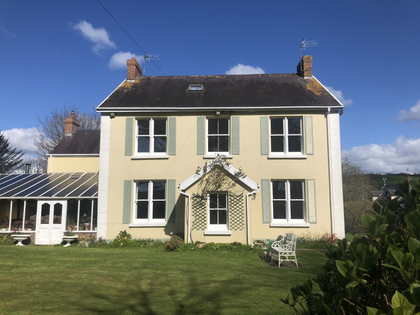
For the perfect break this magnificent Welsh Country House commands one of the most prestigious positions in the Pembrokeshire Coast National Park and only a 5 minute stroll from the spectacular coastal path.

Introducing our new barn conversion double self-catering cottage.

Our convenient location provides peace and tranquility yet within easy access to the unspoilt beaches of Tenby, Saundersfoot, Penally and Lydstep, the three castles of Manorbier, Carew and Pembroke and the charming floral village of St Florence.

 
Giltar Grove Country House
Pembrokeshire National Park, Penally,
Tenby, Wales
  • 4 Double Rooms, en-suite.
    2 with four-poster beds
  • 1 Twin Room, en-suite
  • 1 Single Room with private facilities
  • Double Self-Catering Cottage
  • 3 Minute walk from the
    costal path
  • Ample safe off road parking
Facilities for Self Catering Cottage
a Bath/Shower a Golf Course(s) Nearby
a Central Heating
a Non Smoking
a Linen Supplied
a TV
a Near The Beach
a Ample Parking

Path to the headland

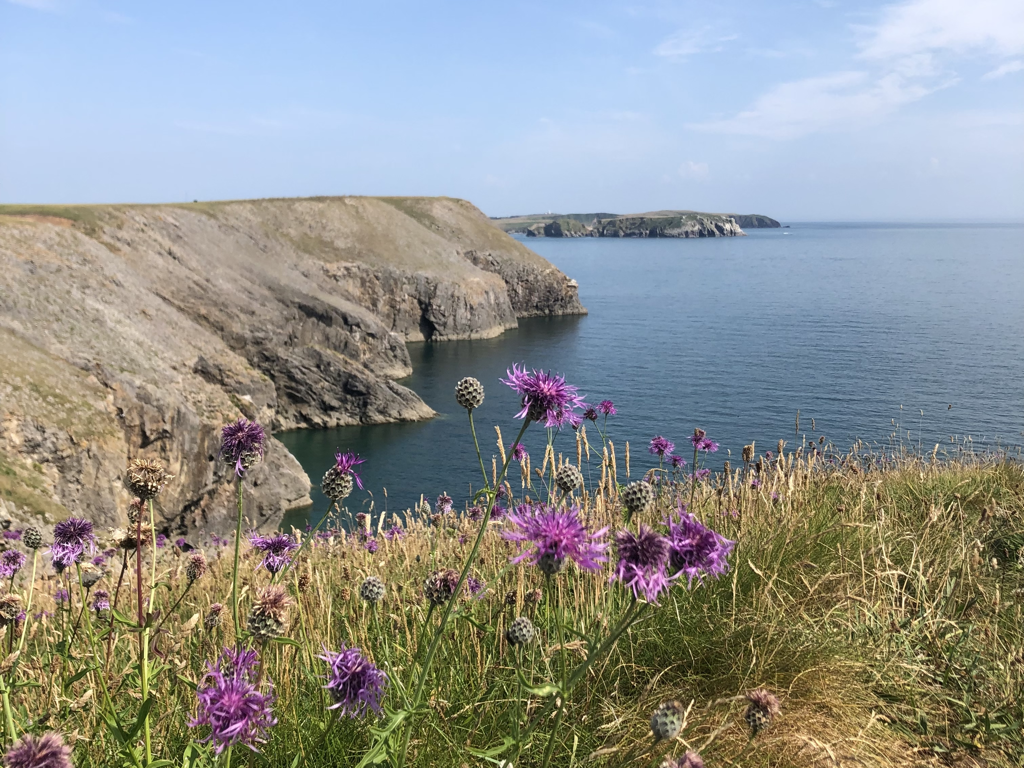
For the not so adventurous, simply relax in the resplendent conservatory or amble onto the headland and enjoy the unparalleled scenery, wildlife and walks.

Unparalleled scenery

For the adventurous, located within 3 miles are:

  • 2 golf courses
  • Riding stables
  • Quad bike riding
  • Fishing and boat trips (leaving throughout the day from the picturesque harbours of Tenby and Saundersfoot).


A brief history of Giltar Grove

On the Spuds

Forty years ago, the fields to the south of the Ridgeway in south Pembrokeshire would have looked far different from the way they do today.

Nowadays they have a varied appearance – green, brown or sheathed in plastic. But in the decades after the war, every south-facing field from Penally to Lamphey, would have been planted with just one crop – early potatoes.

“In 1968 there were 20,000 acres under early spuds in Pembrokeshire,” explained Robert Joseph. “Nowadays the figure is more like 2,000 acres.”

Robert’s interest in early potatoes growing stems from the fact that his father, Joe Joseph, was one of the pioneers of the industry in Pembrokeshire. Indeed the definitive book on the subject, Early Potatoes by Louis Thomas and Paul Eyre, used Joe Joseph’s farm at Giltar Grove near Penally as its basis, and all the illustrations from the book (some of which are reproduced here) were courtesy of Mr Joseph.

Horses were still used at Giltar Grove in the 1960s.The book has long been out of print, but it remains the ‘bible’ for those producers lucky enough to have a copy. One of the authors was Louis Thomas from Clynderwen whose uncle, Sir Roger Thomas, had toured south Pembrokeshire in 1934, giving lectures on the growing of early potatoes on a commercial scale.

Back in 1922 there were just two acres of earlies grown in the country, and even by this time only about 50 acres were grown annually – just enough to serve the local market.

Trails were subsequently carried out on various farms with encouraging results, and in one experiment Peter England of Cardiff successfully planted and harvested 200 acres of early potatoes on Williamston Mountain near Houghton. By 1939, over 1,000 acres of early potatoes were being grown annually in Pembrokeshire and the industry was starting to take off.

Farmers were helped by the introduction of the Arran Pilot. This variety of potato produced good yields and was also disease resistant – especially when the seed was obtained from the Crymych area where the crisp mountain air killed off most infections. In the 1930s the Crymych Seed Growers’ Association had come into being with the aim of supplying Pembrokeshire growers, and by 1939 it had 31 members.

In 1940, Louis Thomas sold his farm at Clynderwen and bought a farm at Penally, close to the coast and with south-facing field’s ideal for early potato growing. For the next few years he worked hard at perfecting the cultivation of early potatoes on a larger scale, even inventing a mechanical potato planter to speed production.

It was in 1946 that Joe Joseph moved to Pembrokeshire. A native of Llanelli, he had worked on the City before the war, for Lloyds of London. After his war service he was reluctant to return to a pin-stripe desk-job and instead enrolled for a year in Surrey Farm College before buying an early-potato farm in south Pembrokeshire.

“He was the original drop-out,” said Robert Joseph, “leaving the city for the good life in Wales.”

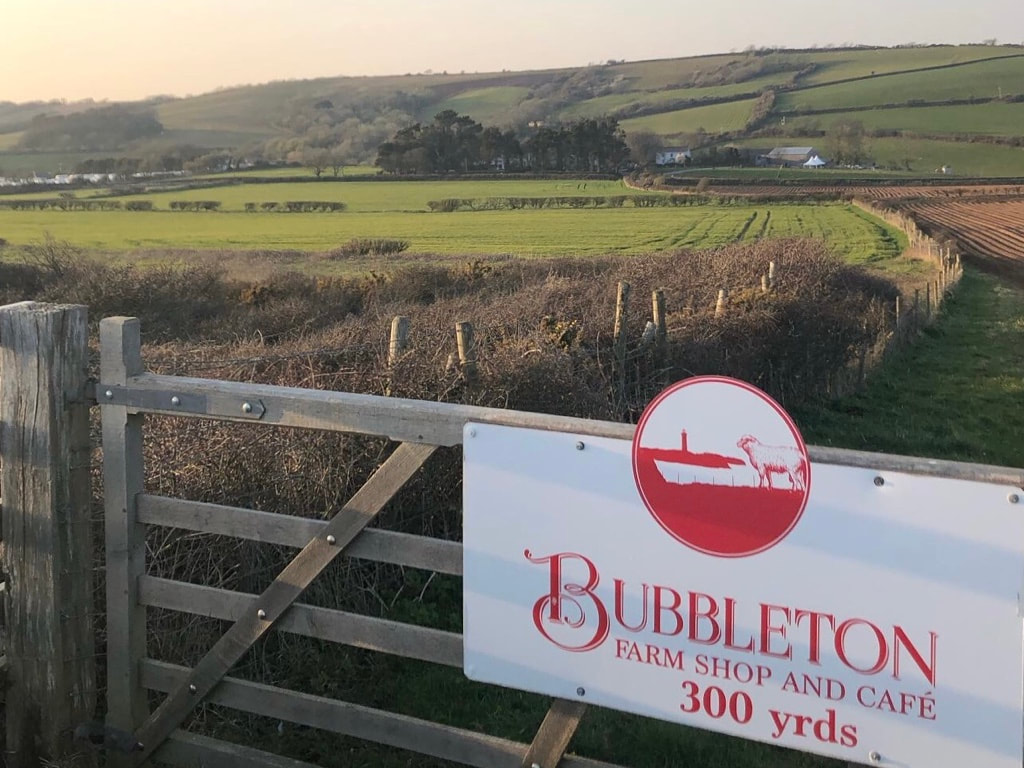
The farm he bought was Upper Bubbleton, changing the name to Giltar Grove to avoid confusion with all the other Bubbleton’s around. Louis Thomas, who was now living next door, had previously farmed it and he soon introduced the newcomer to the mysteries of early potato growing.
Courtesy of Pembrokeshire Life 2003
NEXT
NEXT
 
© Giltar Grove Country House 2006 > Site by LSI-TECH
Giltar grove Country House Bed & Breakfast Self-Catering Cottage